1940s – 1960s
Winds of Change
The 1960s marked a turning point for both Malawi and Bishop Mackenzie School. In 1959, four years before independence, the school shed its colonial name Lilongwe European School and became Bishop Mackenzie School, signalling a shift toward a more inclusive and forward-looking identity. The new name honoured Bishop Charles Mackenzie, a missionary and early abolitionist, symbolising progress and purpose during a time of change.
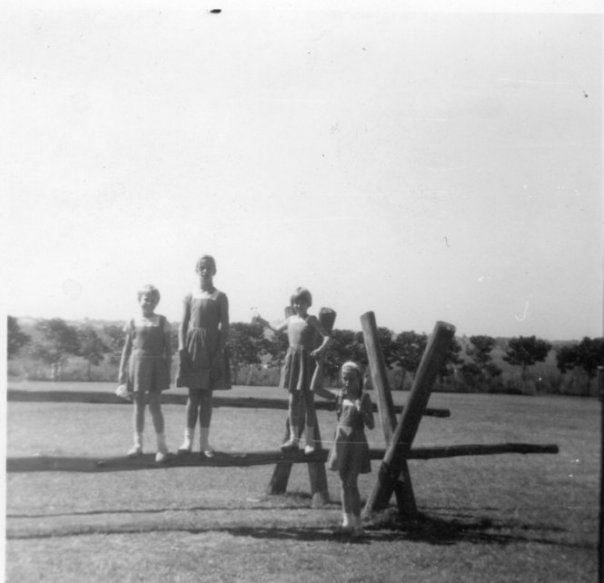
Bishop Mackenzie students in the 1960s. Photo courtesy of Angela Ratto.
As Malawi transitioned to independence under Dr. Hastings Kamuzu Banda, the school also began to grow. One of the first signs of development was the construction of its first swimming pool, an exciting milestone in a city that had none at the time. Former students recall how the pool was built through community fundraising and quickly became the heart of the school's social life. The opening ceremony, attended by then-Minister of Education Henry Masauko Chipembere, included a symbolic tree planting.
Bishop Mackenzie School Swimming Gala at the New Swimming Pool. 1963.
Credit: The Pryce Family
Though the tree was later removed due to political tensions following Chipembere’s failed coup, the event captured the spirit of transformation that defined the era. These foundational changes both symbolic and practical, marked the beginning of Bishop Mackenzie School’s evolution into a diverse, community-rooted institution. They set the stage for decades of growth and helped shape the school’s enduring legacy in Malawi's education landscape.
Henry Masauko Chipembere with wife Catherine in the 1960s.
Credit: Adapted from “Vita: Masauko Chipembere,” Harvard Magazine, May-June 2010.
Though the tree was later removed due to political tensions following Chipembere’s failed coup, the event captured the spirit of transformation that defined the era. These foundational changes both symbolic and practical, marked the beginning of Bishop Mackenzie School’s evolution into a diverse, community-rooted institution. They set the stage for decades of growth and helped shape the school’s enduring legacy in Malawi's education landscape.
Winds of Change
Bishop Mackenzie students in the 1960s. Photo courtesy of Angela Ratto.
The 1960s marked a turning point for both Malawi and Bishop Mackenzie School. In 1959, four years before independence, the school shed its colonial name Lilongwe European School and became Bishop Mackenzie School, signalling a shift toward a more inclusive and forward-looking identity. The new name honoured Bishop Charles Mackenzie, a missionary and early abolitionist, symbolising progress and purpose during a time of change.
As Malawi transitioned to independence under Dr. Hastings Kamuzu Banda, the school also began to grow. One of the first signs of development was the construction of its first swimming pool, an exciting milestone in a city that had none at the time. Former students recall how the pool was built through community fundraising and quickly became the heart of the school's social life. The opening ceremony, attended by then-Minister of Education Henry Masauko Chipembere, included a symbolic tree planting.
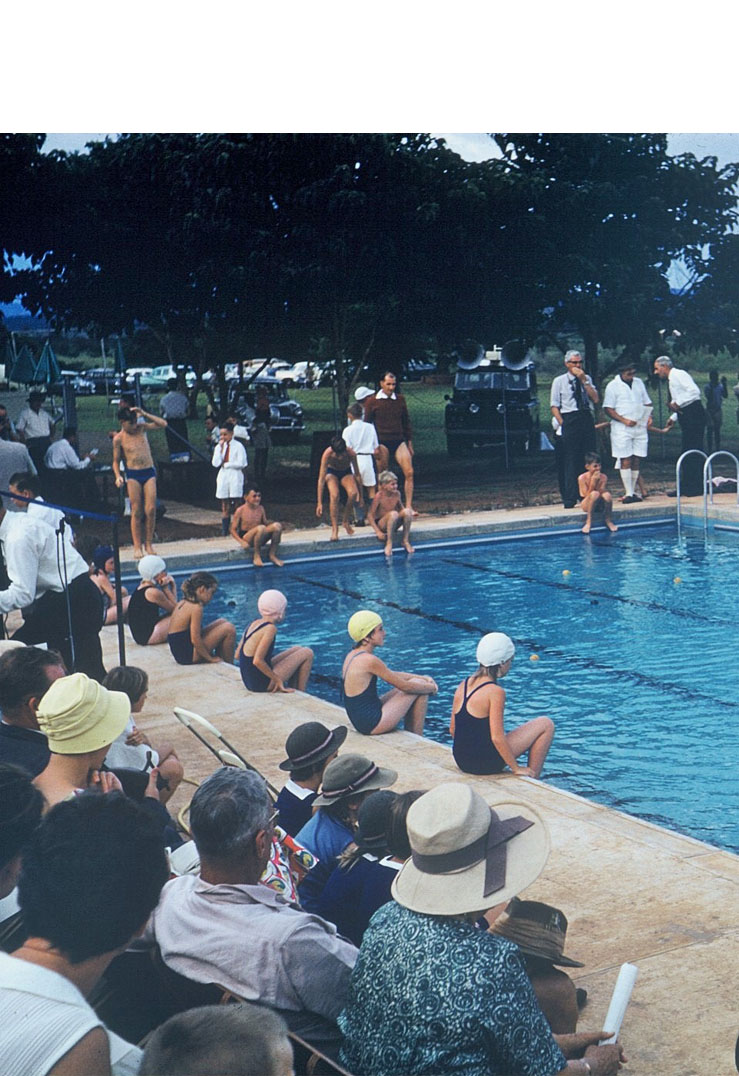
Bishop Mackenzie School Swimming Gala at the New Swimming Pool. 1963. Credit: The Pryce Family
Though the tree was later removed due to political tensions following Chipembere’s failed coup, the event captured the spirit of transformation that defined the era. These foundational changes both symbolic and practical, marked the beginning of Bishop Mackenzie School’s evolution into a diverse, community-rooted institution. They set the stage for decades of growth and helped shape the school’s enduring legacy in Malawi's education landscape.
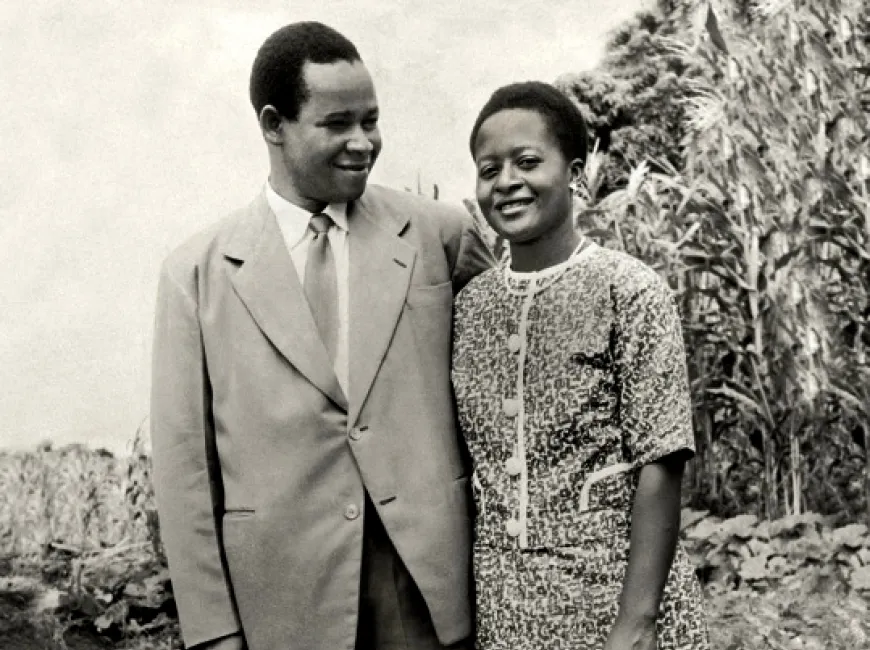
Henry Masauko Chipembere with wife Catherine in the 1960s. Credit: Adapted from “Vita: Masauko Chipembere,” Harvard Magazine, May-June
Though the tree was later removed due to political tensions following Chipembere’s failed coup, the event captured the spirit of transformation that defined the era. These foundational changes both symbolic and practical, marked the beginning of Bishop Mackenzie School’s evolution into a diverse, community-rooted institution. They set the stage for decades of growth and helped shape the school’s enduring legacy in Malawi’s education landscape.