An Era of Growth and Transformation (1980s to Mid-1990s)
Between the 1980s and the mid-1990s, Bishop Mackenzie International School (BMIS) witnessed significant growth and transformation, building on the foundations laid in previous decades.
During this era, BMIS became more actively involved in inter-school sports competitions, particularly with other schools under the administration of the Designated Schools Board (DSB). These matches, which included netball for girls and football for boys against schools like Phoenix International Primary School and Dzalanyama Primary School, were celebrated in the school’s annual yearbook, The Mitre. The 1985 edition of The Mitre chronicles these events, reflecting the school’s commitment to fostering a competitive spirit and camaraderie among its students.
Technological advancements also made their way into BMIS, with computers being introduced in 1984, donated by the Lilongwe Tobacco Industry.By 1985, computers had become an integral part of the school’s curriculum, with all students from Reception to Form One receiving weekly computer time. According to the 1985 issue of The Mitre, both teachers and students embraced this new technology enthusiastically, marking the beginning of a digital shift in the school’s educational approach.
Early Missionary Education
1984, the school library was established in what had previously been the Lilongwe Court House. This building, temporarily used as the school hall, became a central hub for students’ academic pursuits.
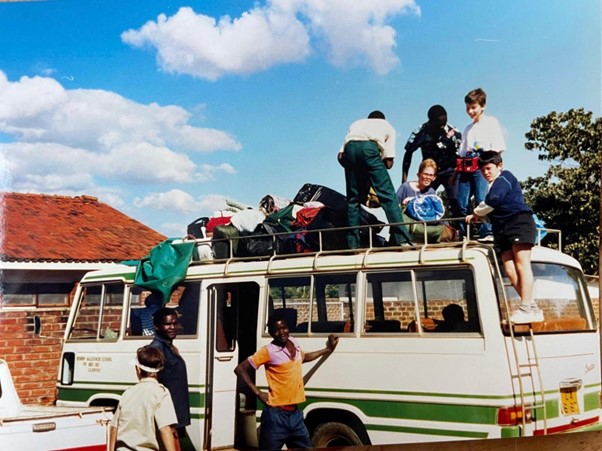
Additional developments included the construction of a new hall adjacent to the dining room, the development of the Lower Sports Fields, and the establishment of a Science Block with three specialist laboratories. A secondary art room was also built, and the area now known as the Bottom Field was cleared and transformed into a level grass field. Furthermore, a ground staff house was converted into the current sports pavilion, enhancing the school’s facilities.The mid-1980s also saw substantial infrastructure developments at BMIS. In
There is some debate about when the first volume of The Mitre was introduced. Some sources suggest it was in 1982, while others argue it coincided with the library’s establishment in 1984. The name of the yearbook, The Mitre, was inspired by the tall headdress worn by bishops and senior abbots, symbolising their office.
In 1985, the boarding school at BMIS was closed, largely due to the majority of students coming from Zambia rather than Malawi. The following year, in 1986, the school saw further expansion with the construction of a new art block, a suite of ESL classrooms, and a shower block. A new network of IBM-compatible computers was also installed, reinforcing the school’s commitment to integrating technology into education.
By 1991, BMIS had introduced GCSE courses, and the following year, the school had fully established all secondary classes up to Form 4. Graham Burgess, who became headmaster in 1990, documented this expansion in the 1992 issue of The Mitre. He noted that the Secondary School had blossomed into four forms with 170 students, and more were expected to enrol in September, pushing the student population to the then maximum of around 220.
This expansion also included the construction of a new school hall, which was initially planned as part of the Secondary School’s development but ultimately became a significant asset to the entire school community. Burgess highlighted the extensive parental involvement, support from the DSB, donations from international bodies, and fundraising activities by the PTA that made these developments possible. He emphasised that the balance between primary and secondary education at BMIS was beneficial, providing long-term residents with peace of mind about the stability and future of their children’s education.
The 1990s also marked a significant shift in the school’s staffing, with the appointment of Kenton Kayira as the first Malawian teacher at BMIS. While Malawian support staff had been part of the school community for some time, Kayira’s appointment signalled a step towards greater inclusivity and representation within the teaching staff.
In 1993, the first cohort of students from BMIS sat for their IGCSE exams, marking a milestone in the school’s academic journey. This achievement coincided with a momentous period in Malawi’s history. On June 14, 1993, Malawi held a referendum to introduce multi-party democracy, ending the Malawi Congress Party’s 27-year monopoly on power. The following year, in 1994, the country held its first multi-party elections, a pivotal moment that would shape the nation’s future.
The period between the 1980s and the mid-1990s was one of expansion, transformation, and adaptation for Bishop Mackenzie International School. The school’s ability to navigate the changing educational landscape and national context during this time reflects its resilience and dedication to providing quality education to its students.
An Era of Growth and Transformation (1980s to Mid-1990s)
Between the 1980s and the mid-1990s, Bishop Mackenzie International School (BMIS) witnessed significant growth and transformation, building on the foundations laid in previous decades.
During this era, BMIS became more actively involved in inter-school sports competitions, particularly with other schools under the administration of the Designated Schools Board (DSB). These matches, which included netball for girls and football for boys against schools like Phoenix International Primary School and Dzalanyama Primary School, were celebrated in the school’s annual yearbook, The Mitre. The 1985 edition of The Mitre chronicles these events, reflecting the school’s commitment to fostering a competitive spirit and camaraderie among its students. Technological advancements also made their way into BMIS, with computers being introduced in 1984, donated by the Lilongwe Tobacco Industry.By 1985, computers had become an integral part of the school’s curriculum, with all students from Reception to Form One receiving weekly computer time. According to the 1985 issue of The Mitre, both teachers and students embraced this new technology enthusiastically, marking the beginning of a digital shift in the school’s educational approach.
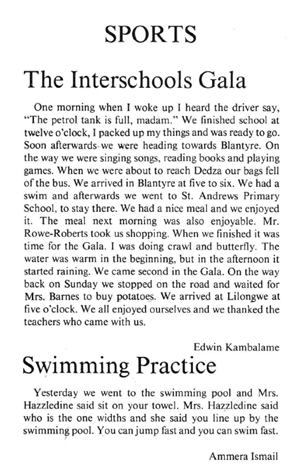
Excerpt from The Mitre (The old BMIS yearbook)
1984, the school library was established in what had previously been the Lilongwe Court House. This building, temporarily used as the school hall, became a central hub for students’ academic pursuits.
Additional developments included the construction of a new hall adjacent to the dining room, the development of the Lower Sports Fields, and the establishment of a Science Block with three specialist laboratories. A secondary art room was also built, and the area now known as the Bottom Field was cleared and transformed into a level grass field. Furthermore, a ground staff house was converted into the current sports pavilion, enhancing the school’s facilities.The mid-1980s also saw substantial infrastructure developments at BMIS. In
There is some debate about when the first volume of The Mitre was introduced. Some sources suggest it was in 1982, while others argue it coincided with the library’s establishment in 1984. The name of the yearbook, The Mitre, was inspired by the tall headdress worn by bishops and senior abbots, symbolising their office.
In 1985, the boarding school at BMIS was closed, largely due to the majority of students coming from Zambia rather than Malawi. The following year, in 1986, the school saw further expansion with the construction of a new art block, a suite of ESL classrooms, and a shower block. A new network of IBM-compatible computers was also installed, reinforcing the school’s commitment to integrating technology into education.
By 1991, BMIS had introduced GCSE courses, and the following year, the school had fully established all secondary classes up to Form 4. Graham Burgess, who became headmaster in 1990, documented this expansion in the 1992 issue of The Mitre. He noted that the Secondary School had blossomed into four forms with 170 students, and more were expected to enrol in September, pushing the student population to the then maximum of around 220.
This expansion also included the construction of a new school hall, which was initially planned as part of the Secondary School’s development but ultimately became a significant asset to the entire school community. Burgess highlighted the extensive parental involvement, support from the DSB, donations from international bodies, and fundraising activities by the PTA that made these developments possible. He emphasised that the balance between primary and secondary education at BMIS was beneficial, providing long-term residents with peace of mind about the stability and future of their children’s education.
The 1990s also marked a significant shift in the school’s staffing, with the appointment of Kenton Kayira as the first Malawian teacher at BMIS. While Malawian support staff had been part of the school community for some time, Kayira’s appointment signalled a step towards greater inclusivity and representation within the teaching staff. In 1993, the first cohort of students from BMIS sat for their IGCSE exams, marking a milestone in the school’s academic journey. This achievement coincided with a momentous period in Malawi’s history. On June 14, 1993, Malawi held a referendum to introduce multi-party democracy, ending the Malawi Congress Party’s 27-year monopoly on power. The following year, in 1994, the country held its first multi-party elections, a pivotal moment that would shape the nation’s future.
The period between the 1980s and the mid-1990s was one of expansion, transformation, and adaptation for Bishop Mackenzie International School. The school’s ability to navigate the changing educational landscape and national context during this time reflects its resilience and dedication to providing quality education to its students.
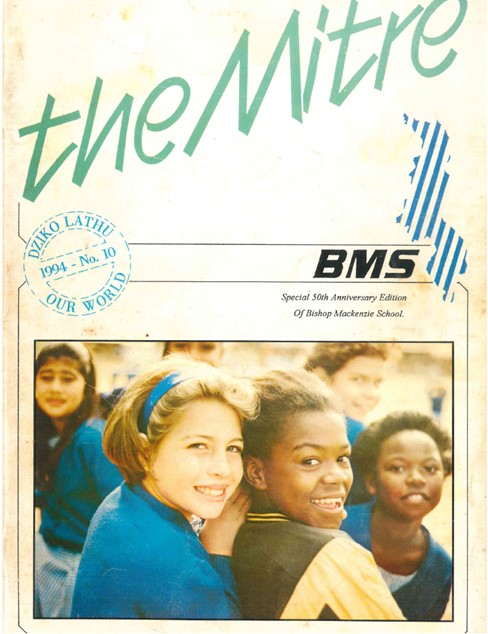
Cover of the Mitre in 1994
In 1997, just before the start of the new school year, BMIS was once again struck by tragedy. Caroline McGowan, a secondary school IT teacher, and her husband Andrew, a businessman, were returning from a holiday in Zimbabwe. As they drove through the “Tete Corridor” in Mozambique, they were stopped by armed men, taken to a nearby village, and executed. The incident sent shockwaves through the BMIS community and beyond.
The Mozambique police acted quickly, finding the bodies and arresting two men for the murders. The men, who were ex-militia, were tried, found guilty, and sentenced to life imprisonment. However, they escaped from jail a month later and have never been found.