1940s – 1960s
What Was Education Like in Nyasaland?
Nyasaland, established as a British Protectorate in 1907, evolved from the former British Central Africa Protectorate. Between 1953 and 1963, it was part of the Federation of Rhodesia and Nyasaland. Following the dissolution of the Federation, Nyasaland gained independence from Britain on July 6, 1964, and was subsequently renamed Malawi.
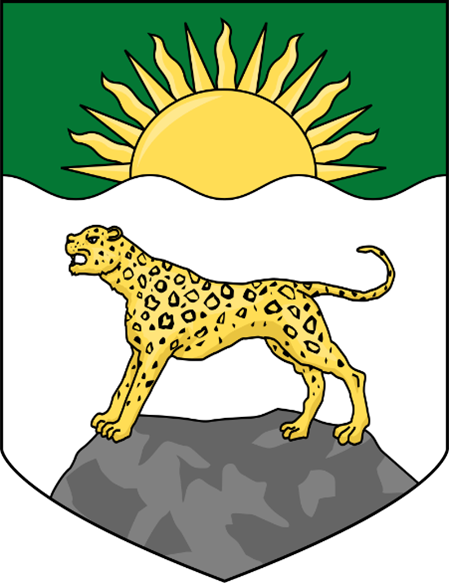
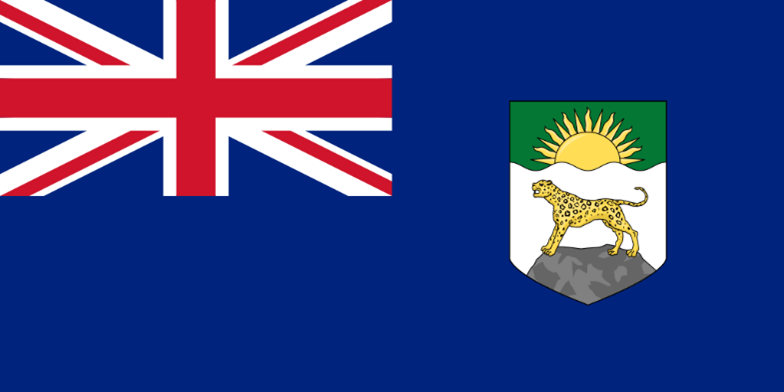
Nyasaland Protectorate Coat of Arms, 1919-1964.
For half a century, from 1875 to 1926, African education in Nyasaland was predominantly under the control of Christian missionaries. These missionaries, hailing from Europe, the United States, and the Union of South Africa, played a crucial role in the region’s education system. Among the most influential were those from Scotland, representing the Established Church and the United Free Church.
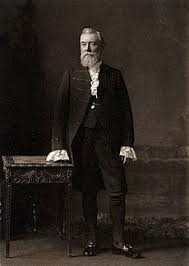
Robert Laws. University of Edinburgh Library Heritage Collections.
Early Missionary Education
In 1875, Robert Laws of the Free Church of Scotland established the first missionary school in Nyasaland. Over the next forty-eight years, missionaries from various denominations sought to evangelize the local population and support the colonial administration through education. These missionary schools, which began receiving partial and increasing state subsidies starting in 1907, primarily trained boys and men for roles in the colonial bureaucracy. Additionally, these schools imparted knowledge to some women, which later contributed to the movement for political independence.
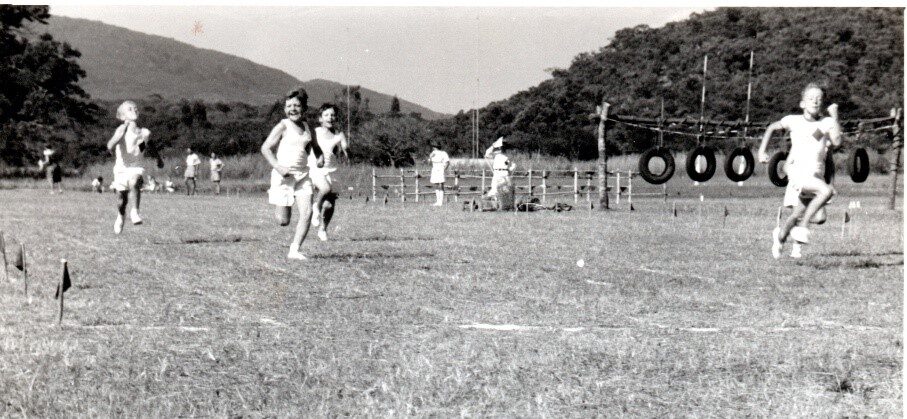
Inter-school sports race between Fort Jameson and Lilongwe European School, 1960s. Image courtesy of the Pryce family.
Establishment of a Formal Education System
The foundations of Malawi’s post-independence education system were laid by European Christian missionaries from 1875 onwards. After a period of neglect by British colonists, a Department of Education was established in 1926 (Banda, 1982; Chirwa & Naidoo, 2014; Lamba, 1984). In 1933, the colonial government introduced a centralised primary school curriculum aimed at instilling moral values and loyalty to the British monarchy. Secondary education, introduced in 1941, was modelled on the elitist academic system of English grammar schools and included a history curriculum that portrayed Malawi as an ahistorical entity, merely an appendage of the British Crown. The curriculum, dictated by external examinations, primarily focused on English and Commonwealth history, with minimal emphasis on African history (Banda, 1982).
Colonial Influence on Education
The British imperial narrative dominated the educational discourse, emphasising the contributions of Canada, New Zealand, Australia, and South Africa (Kalinga, 1998). School history portrayed the colonised as “lazy, backward, and savage” while extolling the imperial powers for bringing civilization to the colonies (Chia, 2012). This skewed perspective aimed to reinforce the superiority of the British Empire and its civilising mission.
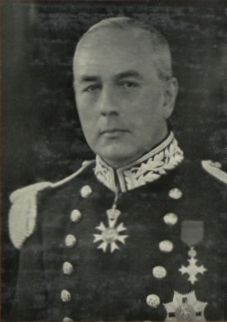
Sir Thomas Shenton Whitelegge Thomas – Governor of Nyasaland in the 1930s. Image courtesy of Colonial Office photographic collection held at The National Archives.
Advisory Committee on Education
On June 24, 1930, the Governor of Nyasaland inaugurated the first session of the Advisory Committee on Education, established under the new Education Ordinance to replace the Board of Education. The Governor highlighted that the Ordinance marked a significant shift in education policy, allowing schools of any description to be opened without stringent controls, even if they were inefficient.
Impact of Global Events
The worldwide economic depression of the 1930s significantly hindered the anticipated growth of educational opportunities throughout Nyasaland. However, the onset of World War II and the establishment of the Colonial Development and Welfare Fund enabled the Nyasaland Government to implement several educational improvements. Secondary education began on a modest scale with the opening of two secondary schools in 1940 and 1942. In 1941, a Standard VI primary school-leaving examination was introduced across the Protectorate.
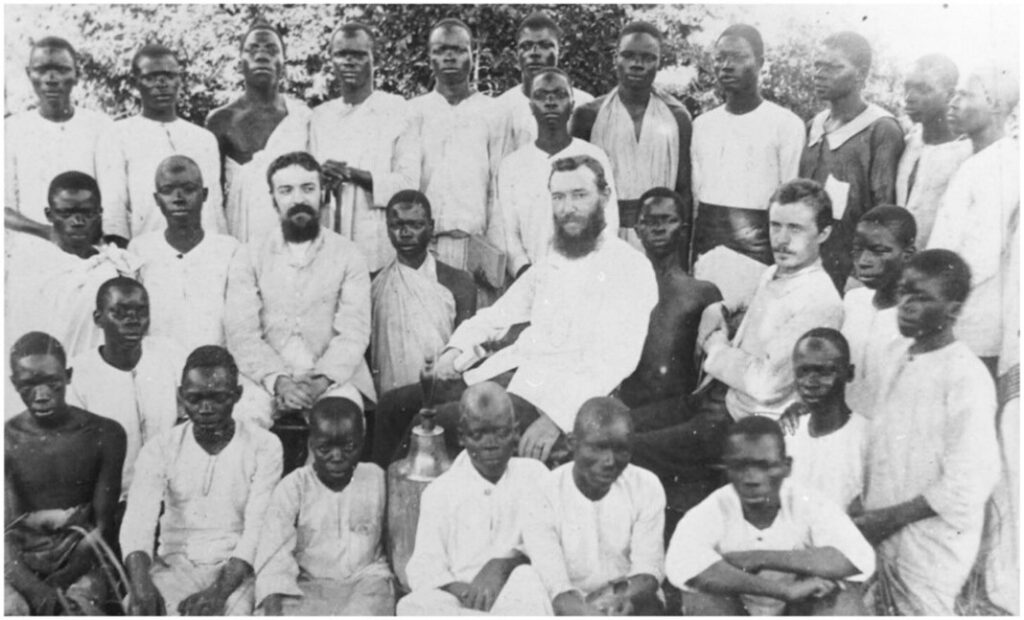
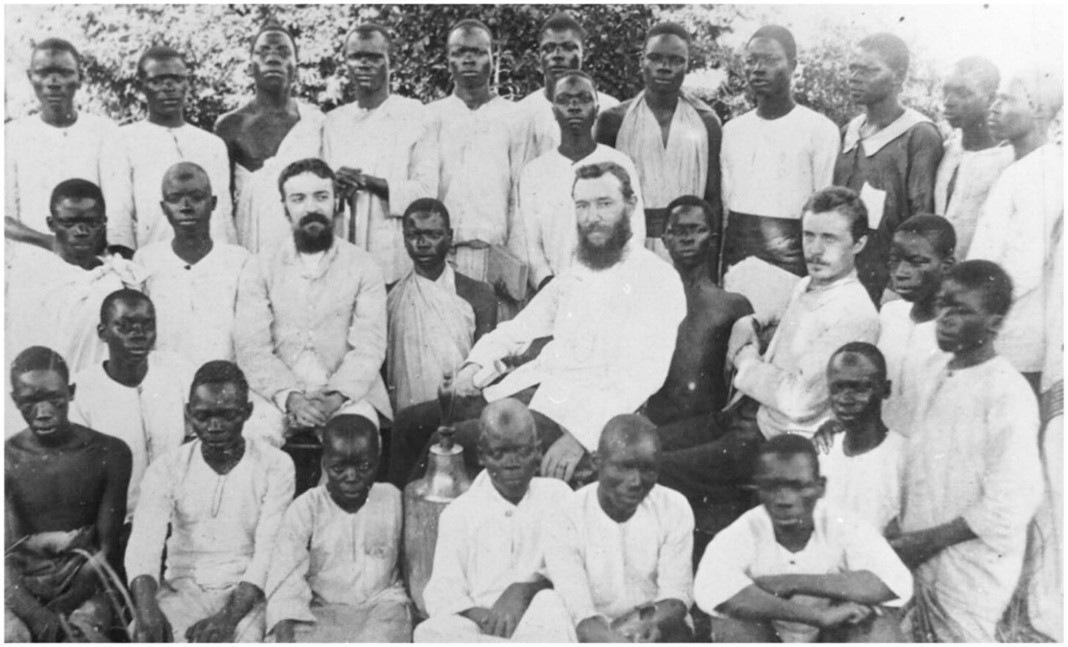
Missionaries in Nyasaland. Image courtesy of African History Online.
Royal Recognition
In 2017, BMIS had the honour of hosting a visit from HRH the Countess of Wessex, Sophie, Duchess of Edinburgh. She officially opened the new Lower Hall and attended a Gold Award Ceremony for the Duke of Edinburgh (DofE) International Awards, which recognized over 100 pupils from both Bishop Mackenzie International School and St Andrew’s International School. The ceremony celebrated a wide range of award activities, from street dance to mountain expeditions, showcasing the diverse talents and achievements of BMIS students.
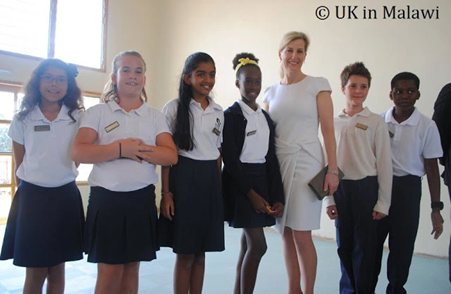
Sophie, Duchess of Edinburgh, with BMIS students in 2017.
Image courtesy of UK in Malawi.
What Was Education Like in Nyasaland?
Nyasaland Protectorate Coat of Arms, 1919-1964.
Nyasaland, established as a British Protectorate in 1907, evolved from the former British Central Africa Protectorate. Between 1953 and 1963, it was part of the Federation of Rhodesia and Nyasaland. Following the dissolution of the Federation, Nyasaland gained independence from Britain on July 6, 1964, and was subsequently renamed Malawi.
For half a century, from 1875 to 1926, African education in Nyasaland was predominantly under the control of Christian missionaries. These missionaries, hailing from Europe, the United States, and the Union of South Africa, played a crucial role in the region’s education system. Among the most influential were those from Scotland, representing the Established Church and the United Free Church.
That same year, he travelled with a small group of missionaries up the Zambezi and Shire rivers, arriving at Chibisa village in Chikwawa in June. He soon established the first mission station at Magomero, near Zomba, and began working among the Mang anja people. Within a week, the mission had liberated over 400 slaves, many of whom made Magomero their home.
Robert Laws. University of Edinburgh Library Heritage Collections.
Early Missionary Education
In 1875, Robert Laws of the Free Church of Scotland established the first missionary school in Nyasaland. Over the next forty-eight years, missionaries from various denominations sought to evangelize the local population and support the colonial administration through education. These missionary schools, which began receiving partial and increasing state subsidies starting in 1907, primarily trained boys and men for roles in the colonial bureaucracy. Additionally, these schools imparted knowledge to some women, which later contributed to the movement for political independence.
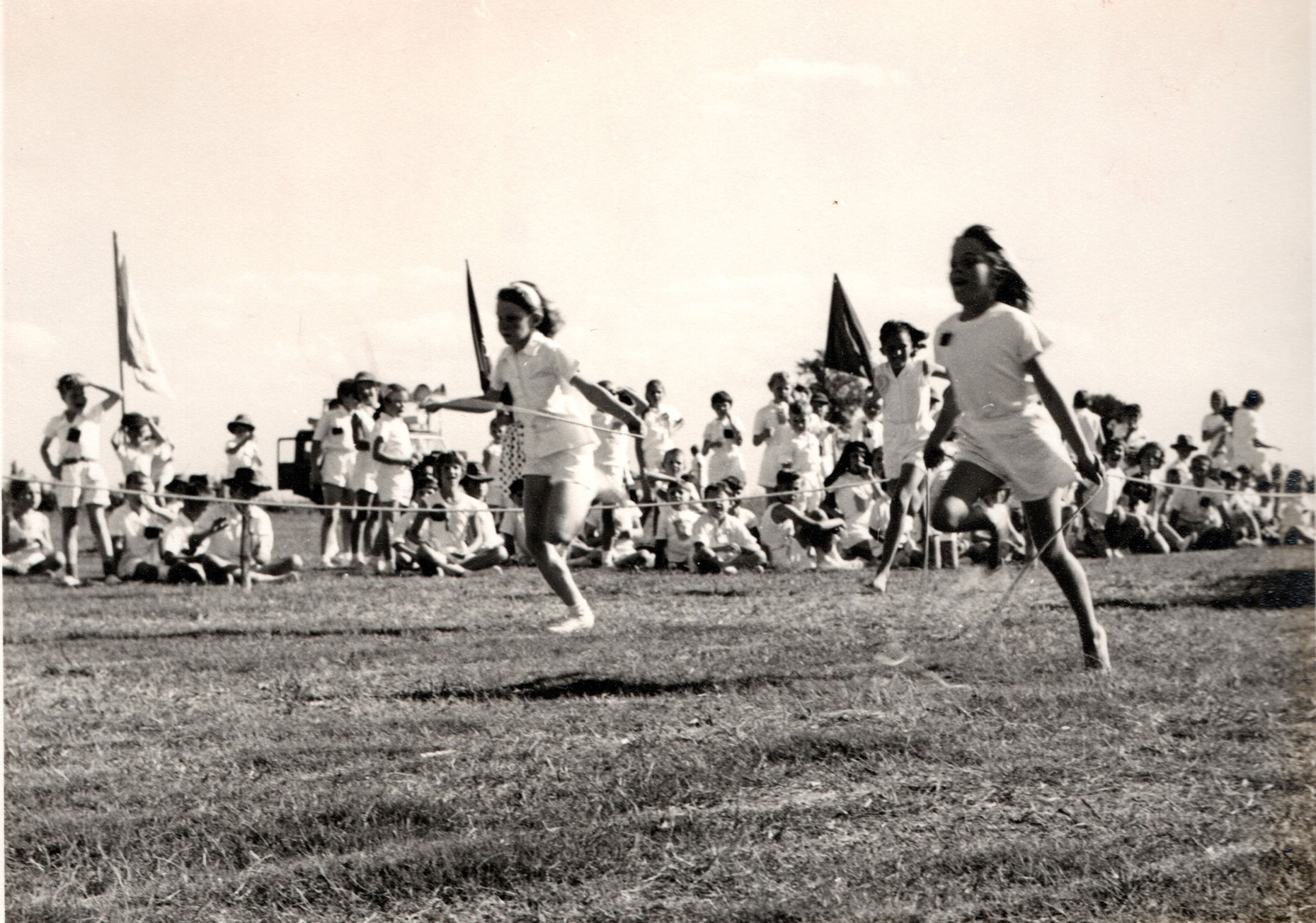
Inter-school sports race between Fort Jameson and Lilongwe European School, 1960s. Image courtesy of the Pryce family.
Establishment of a Formal Education System
The foundations of Malawi’s post-independence education system were laid by European Christian missionaries from 1875 onwards. After a period of neglect by British colonists, a Department of Education was established in 1926 (Banda, 1982; Chirwa & Naidoo, 2014; Lamba, 1984). In 1933, the colonial government introduced a centralised primary school curriculum aimed at instilling moral values and loyalty to the British monarchy. Secondary education, introduced in 1941, was modelled on the elitist academic system of English grammar schools and included a history curriculum that portrayed Malawi as an ahistorical entity, merely an appendage of the British Crown. The curriculum, dictated by external examinations, primarily focused on English and Commonwealth history, with minimal emphasis on African history (Banda, 1982).